Teaching in the Age of AI: VCU Convenes Faculty, Students, and Partners for Daylong Summit
May 14, 2026
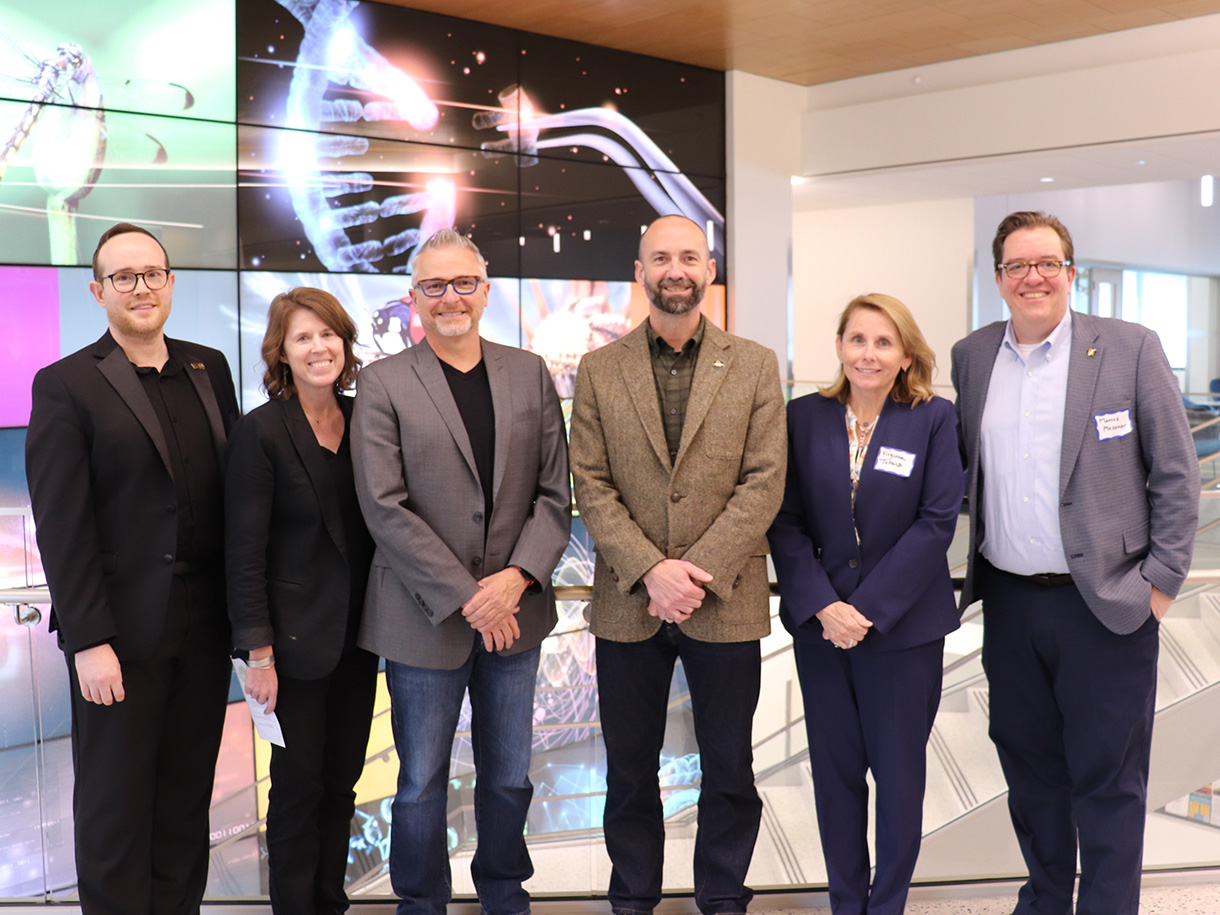
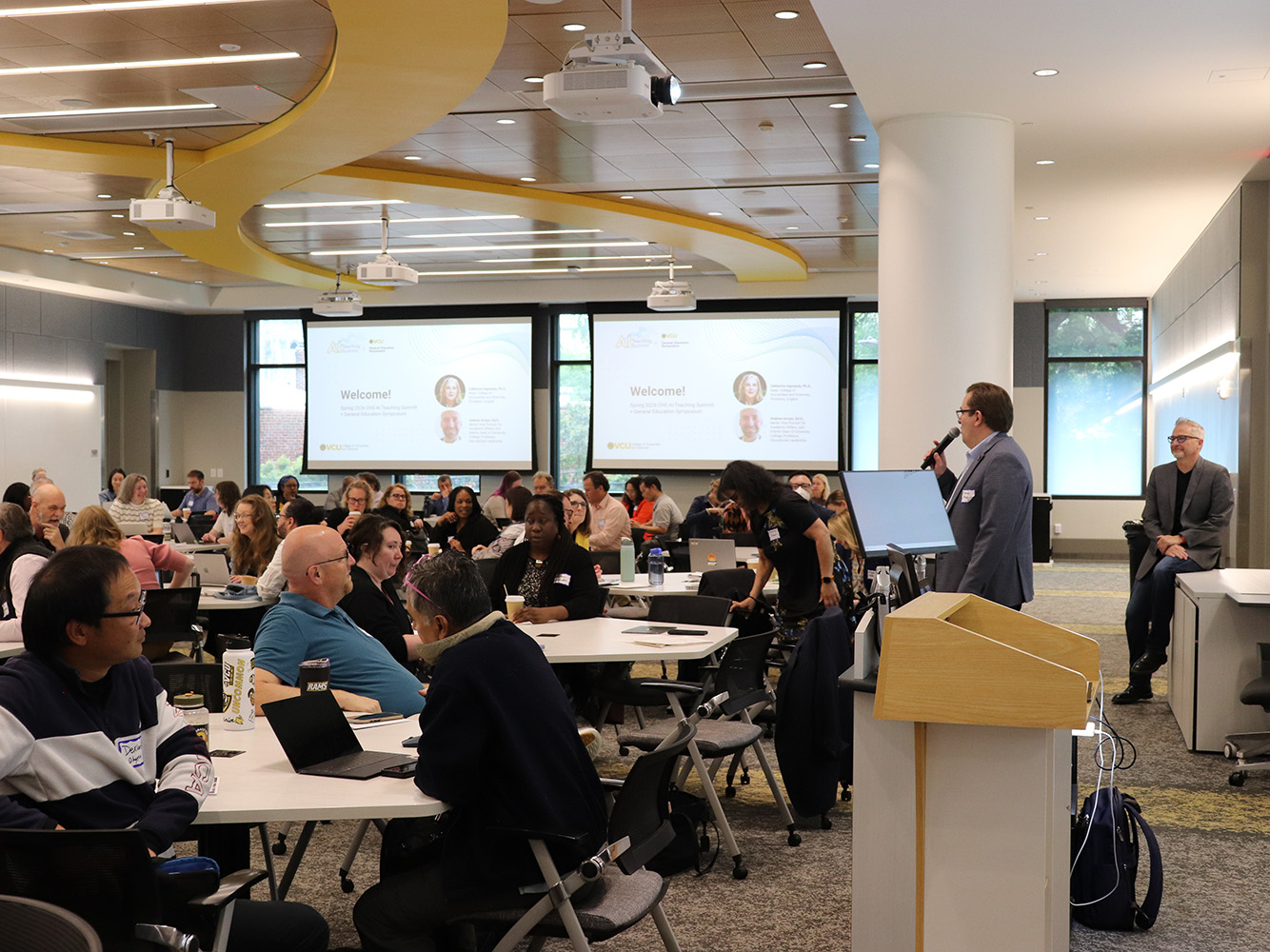
More than 200 faculty, staff, students, and academic partners gathered at Virginia Commonwealth University’s College of Humanities and Sciences on April 29 for the CHS AI Teaching Summit, a daylong program examining how artificial intelligence is reshaping higher education. Held in collaboration with the General Education Symposium, the event took place in the STEM Building and featured keynote remarks, student and faculty panels, and workshop sessions focused on classroom practice, course design, and academic policy in response to generative AI.
“This year’s AI Teaching Summit reflects strong engagement across VCU and partner institutions in Virginia,” said Catherine Ingrassia, Ph.D., dean of the College of Humanities and Sciences. “The turnout signals growing momentum in higher education to thoughtfully shape how AI is transforming teaching and learning, while keeping a human-centered approach rooted in the humanities and sciences. I am deeply grateful to all of the participants for contributing their time, ideas, and expertise to this important conversation.”
Broad participation across disciplines
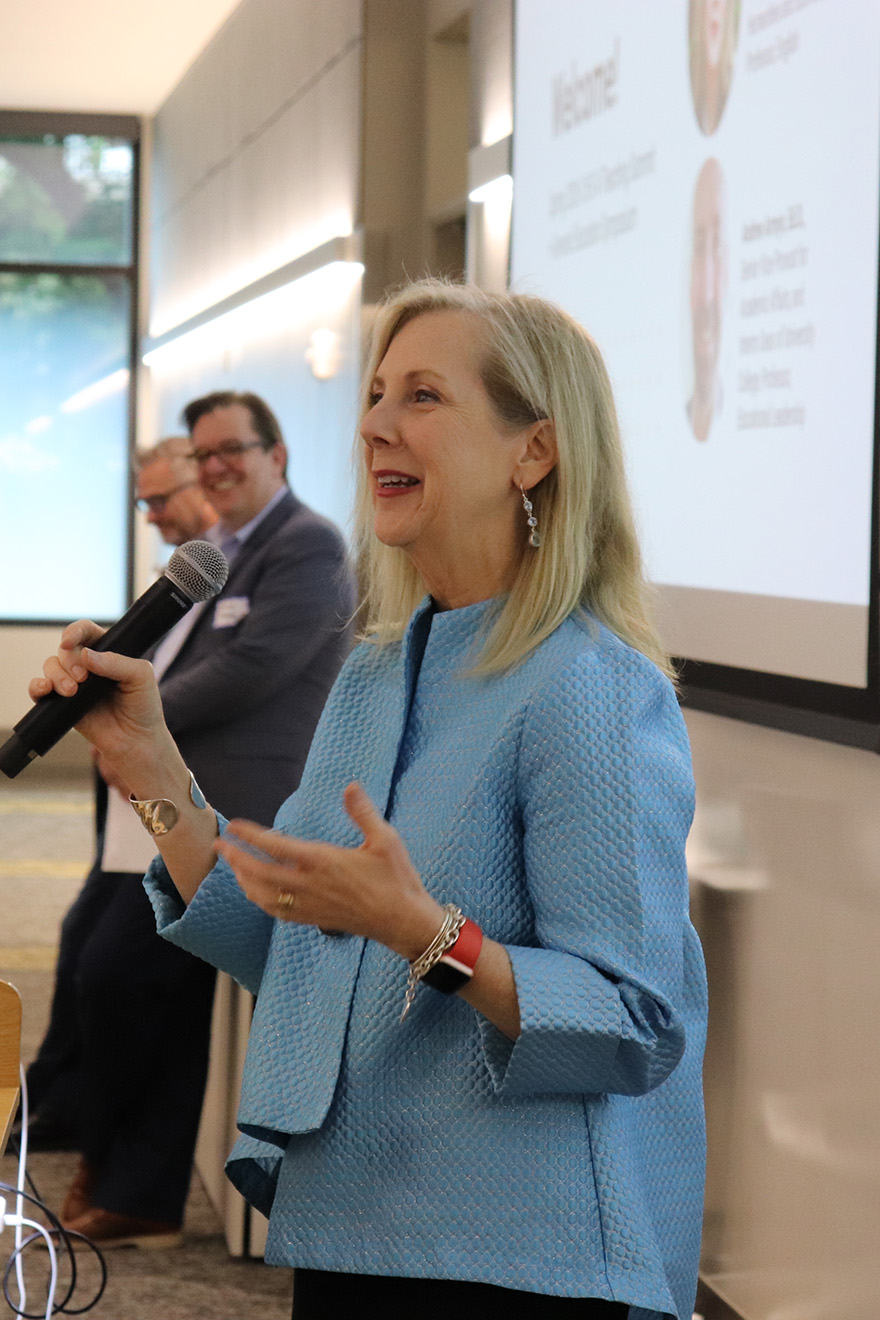 Ingrassia welcomed the attendees of the event together with Andrew Arroyo, Ed.D., senior vice provost for academic affairs. Attendees represented more than 15 academic units across VCU, including the College of Humanities and Sciences, School of Education, School of World Studies, VCU Libraries, School of Nursing, and the College of Health Professions. Some faculty and staff from James Madison University also participated.
“This level of participation reflects how quickly AI has become a shared concern and opportunity across disciplines,” said Marcus Messner, Ph.D., associate dean of the College of Humanities and Sciences. “What’s especially significant is that these conversations are no longer isolated to individual departments; they are happening across the university and extending to partner institutions, which shows real momentum in how higher education is responding together.”
Student panel highlights changing learning environment
A student panel emerged as one of the most frequently cited sessions in post-event feedback, offering faculty direct insight into how students are engaging with generative AI in their coursework. Across responses, faculty consistently noted that hearing directly from students helped ground broader discussions about teaching, assessment, and academic integrity in real classroom experience.
“It was useful to the extent that it provided direct, unfiltered insight into how students are actually using AI,” one attendee wrote in post-event feedback. Another commented, “It was inspiring and reassuring to hear such mature voices around the use of AI as a tool and not a crutch.”
Faculty repeatedly emphasized that the session clarified important gaps between student and instructor assumptions about AI use in academic settings, particularly around what students view as acceptable support for learning versus what faculty often interpret as misuse. Many noted that this perspective was essential for understanding how quickly norms around AI are evolving inside the classroom and how those shifts are reshaping expectations on both sides of the teaching relationship.
Connect AI innovation with core academic competencies
 Midday participants gathered for a keynote lecture by Dr. C. Edward Watson, vice president for digital innovation from the American Association of Colleges and Universities (AAC&U). He spoke about academic integrity and AI, as well as provided practical strategies to positively impact cheating and student learning. “The keynote underscored an important shift in higher education, where AI is not a future consideration but a present reality shaping how students learn and how faculty design their courses,” said Virginia Totaro, director of general education at VCU. “For general education faculty in particular, this moment is an opportunity to thoughtfully integrate AI into foundational courses in ways that strengthen critical thinking, communication, and ethical reasoning while preparing students for the world they are entering.”
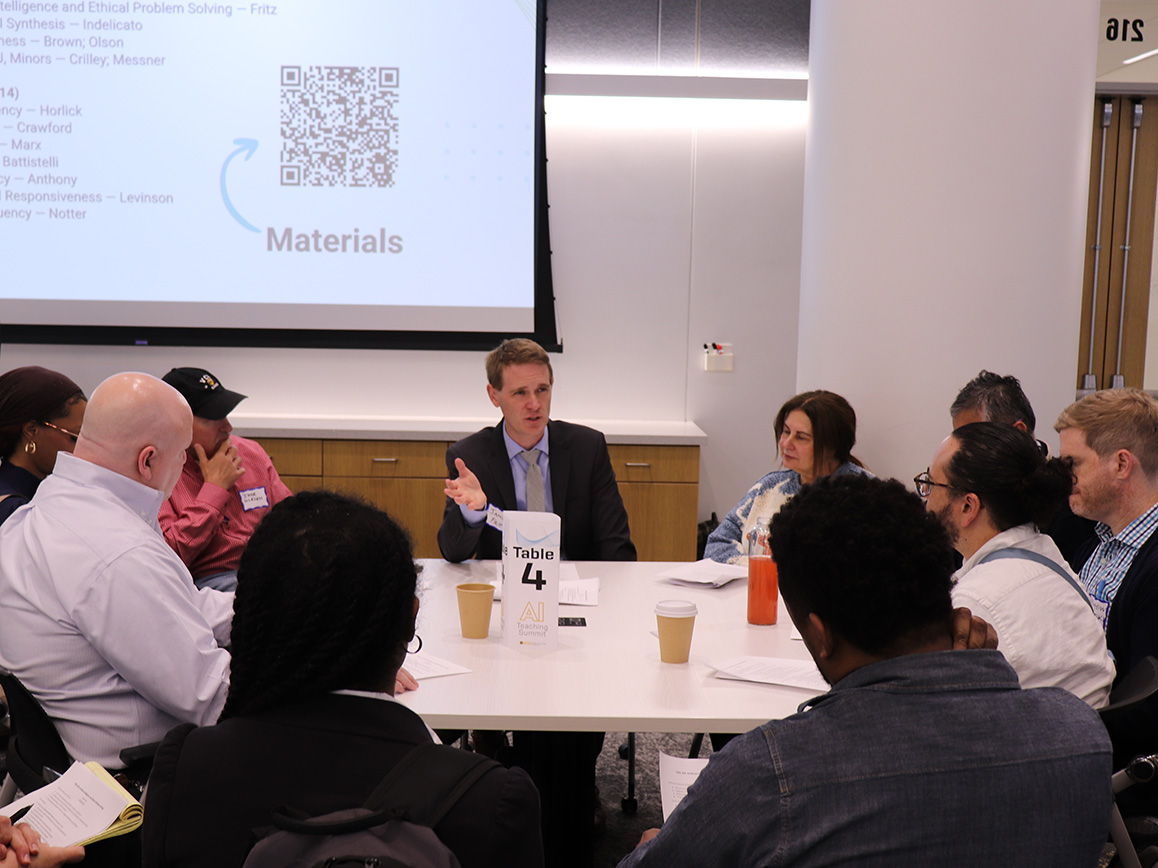
Later, faculty gathered for roundtable discussions focused on two main areas: new ways of teaching with AI and general education skills students need across disciplines. Faculty shared ideas for new courses on topics such as AI literacy, storytelling, ethics, and using AI in real-world tasks, while also connecting these changes to core skills like writing, problem-solving, and information literacy. Together, the 14 tables created a space for cross-disciplinary conversation about how AI is reshaping teaching and learning at VCU.
“From survey data we’ve collected over the past year and up to this event, we’re seeing a steady increase in how comfortable faculty feel using AI tools in their teaching, and a clear shift toward leaning into conversations about AI rather than stepping away from them,” said Joshua J. Smith, Ph.D., special assistant to the dean for innovative learning and AI Initiatives. “While valid concerns remain present in faculty feedback, there is also growing agreement compared to last year that AI will play an important role in students’ learning and future careers, and that it has a meaningful place in our curriculum.”
Workshops focus on applied tools and policy
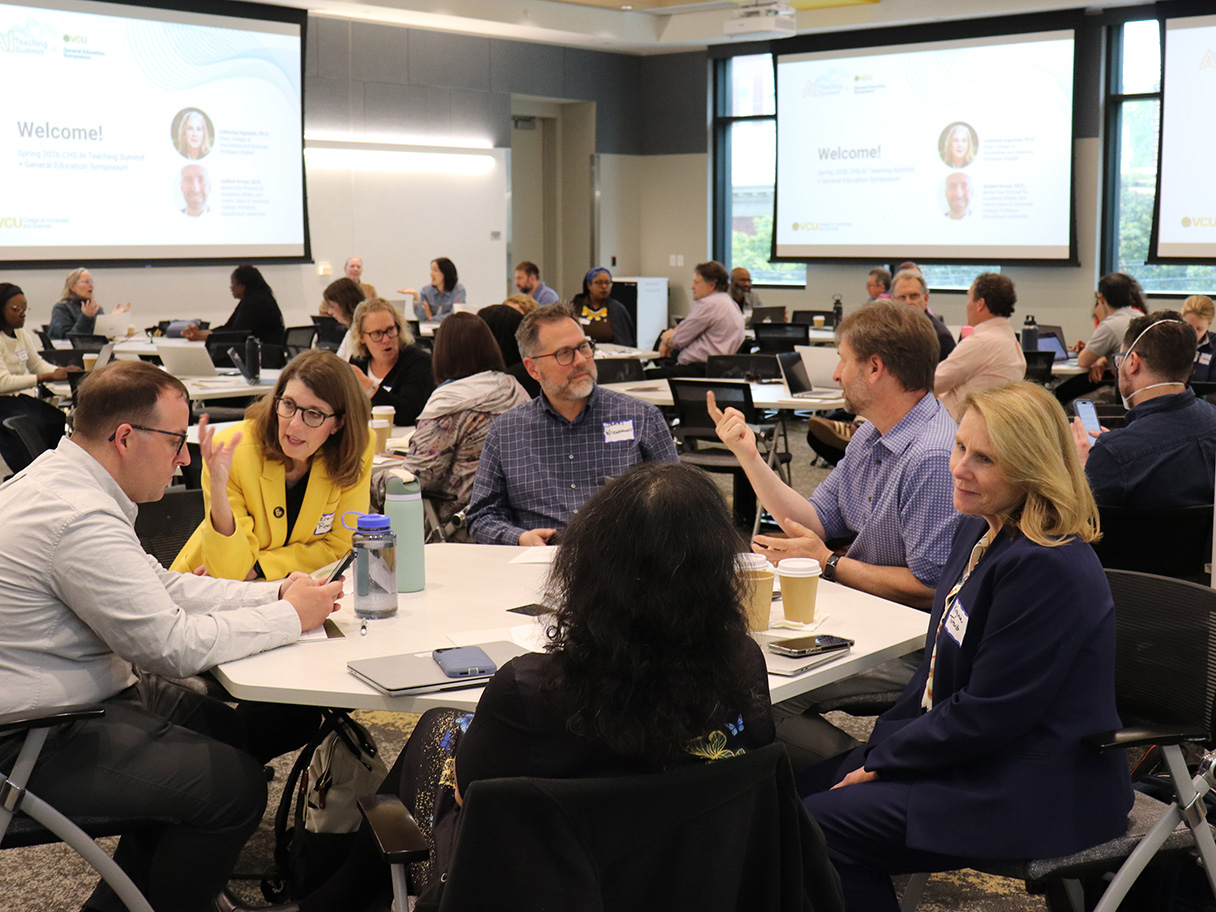 Afternoon workshops focused on hands-on applications of AI in teaching, including syllabus development, assignment redesign, and information literacy. Sessions featured demonstrations of tools such as NotebookLM, discussions of AI policy language in syllabi, and practical approaches to integrating generative AI into student assignments and research workflows.
Sessions were supported through collaboration with VCU Libraries, the LED Studio, the Office of the Provost, and the General Education program, reflecting a cross-institutional effort to support faculty development and AI readiness across campus. Will Willis, chair of the nonprofit initiative AI Ready RVA, also contributed to discussions focused on workforce alignment and the growing importance of AI competencies for students entering the job market.
Feedback from attendees emphasized the value of applied examples, templates, and concrete strategies that could be immediately adapted for classroom use in semesters to come.
Looking ahead
 The CHS AI Teaching Summit is part of a broader effort to support faculty development and expand AI literacy across the university. The launch of the CHS AI HUB will bring together resources and opportunities for faculty, students, and the community. Upcoming programming will include an AI Research Summit in Fall 2026 (currently accepting proposals), the continued rollout of the AI in Pedagogy badge, and the launch of a Faculty AI Interest Group designed to support ongoing collaboration, resource-sharing, and practice-based learning across disciplines. Together, these initiatives aim to provide sustained pathways for faculty engagement with artificial intelligence in teaching, research, and curriculum design.
The CHS AI Teaching Summit is part of CHS’s broader commitment to advancing instructional innovation, faculty development, and AI literacy, with support from campus partners including the Media + AI Initiative.