Five Questions with African American studies and political science major Queani Johnson
April 21, 2026
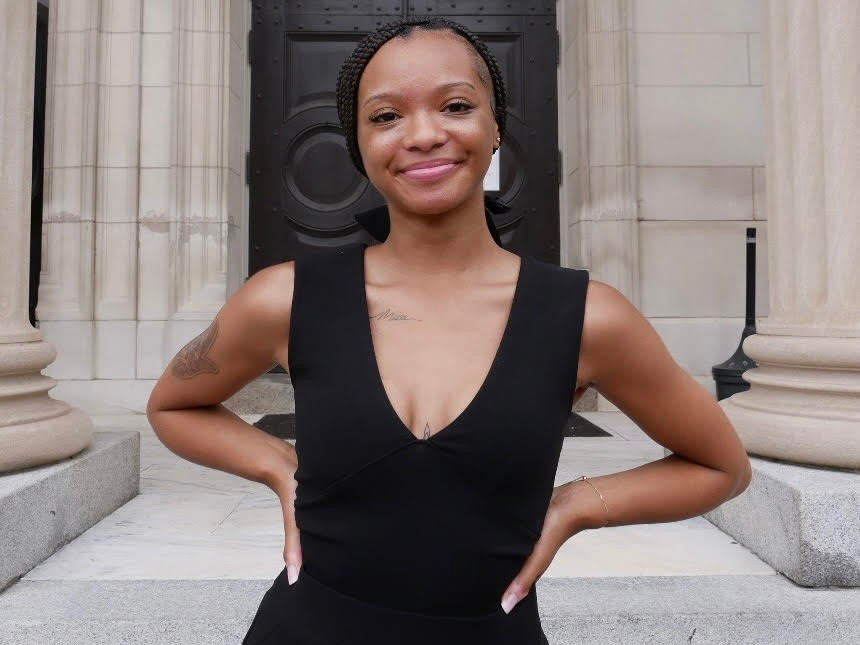
Queani Johnson wants to be an attorney in the Mid-Atlantic region and plans to apply to law school after her graduation next year. To pursue this dream, Johnson has juggled internships alongside completing coursework in the Departments of African American Studies and Political Science. The double major isn’t slowing down as she currently serves as an intern with the United States Court of Appeals Fourth District, gaining invaluable experience in the federal court system, only one level beneath the U.S. Supreme Court.
Why did you choose your major?
Since elementary school, I have been passionate about African American history, having read numerous autobiographies, non-fiction works, and fictional texts. Any subject that hints at the African American experience throughout history motivates me to continue acquiring knowledge, which is why I selected African American studies as my major.
Regarding my second major, political science, I am deeply interested in understanding the development of political systems over time, from ancient periods to the present, and their implementation in contemporary society. Political science provides a wide array of opportunities to explore concepts of power, governance, and political behavior, making the knowledge gained from this discipline extensive and invaluable.
Favorite class so far? Why?
My favorite class within my political science major was INTL 105: International Relations, taught by William W. Newmann, Ph.D. The exploration of concepts such as realism, idealism, and constructivism in relation to the construction of power profoundly captivated me and inspired me to pursue further knowledge in the field of international relations, a discipline I was previously unfamiliar with.
Additionally, AFAM 211: Africana Social and Political Thought, taught by Adam Ewing, Ph.D., was another favorite course in my African American studies major. The course's discussion-oriented format stimulated my critical thinking about how political and social ideas are applied in practice, not only within African American society but across the entire African continent.
Favorite professor so far? Why?
My most esteemed professor to date is Professor Charles Kehoe, despite the fact that he is not affiliated with either of my double majors. I found his CRJS 253: Introduction to Corrections course particularly engaging.
Beyond the course material, I cherished the interactions we shared, as he was consistently impressed by the work I was undertaking both academically and in my extracurriculars. He even supported my aspirations and goals for the future. Although he may not be aware of it, I sincerely appreciated his kindness during our numerous conversations. Moreover, he provided guidance on succeeding in his class, especially when I expressed concerns about not achieving the grades I aspired to. He mentored me throughout this process, and I hold him in genuine regard.
He exemplifies the type of professor every student should have the opportunity to encounter, especially as a college student driven by dreams and hope. It is always reassuring to know that there are individuals who support you and are willing to help you reach your potential, both within and beyond the classroom. Thank you, Professor Kehoe!
Most interesting thing in your major's curriculum that you've learned or experience you've had?
Last year, I secured an internship that aligns with my majors in political science and African American studies. As a judicial intern with the United States District Court Eastern District of Virginia’s Model Intern Program, I worked with the federal probation office and the bankruptcy court.
I have now transitioned to the United States Courts of Appeals for the Fourth Circuit. This year-long paid internship was a great opportunity for me, providing extensive exposure to judicial processes. During my internship, I rotated through federal, appellate, district, and bankruptcy courts to gain comprehensive insight into judicial operations. I observed civil and criminal court proceedings, supporting judges and legal professionals. My responsibilities included drafting Pre-sentence Investigation Reports (PSRs), petitions, memoranda, and referrals to national counseling services.
Additionally, I assisted with jury coordination, naturalization ceremonies, and public outreach events. I conducted legal research and prepared case summaries, data analyses, and statistical reports. Furthermore, I collaborated with the U.S. Probation, Pretrial Services, Public Defenders, U.S. Attorneys, and U.S. Marshals, gaining practical experience in court administration, legal procedures, and community engagement.
What are you hoping to do after graduation? Why?
Following graduation, I intend to enroll in law school within the Richmond, DMV, or North Carolina region to pursue my ambition of becoming the first attorney in my family. Although the journey may be challenging, I am prepared to undertake the endeavour. In addition to attending law school, I aspire to continue working in the federal and public defender sectors to support my career goals in federal litigation and public service.