Free Food, Full Fridges, Zero Waste
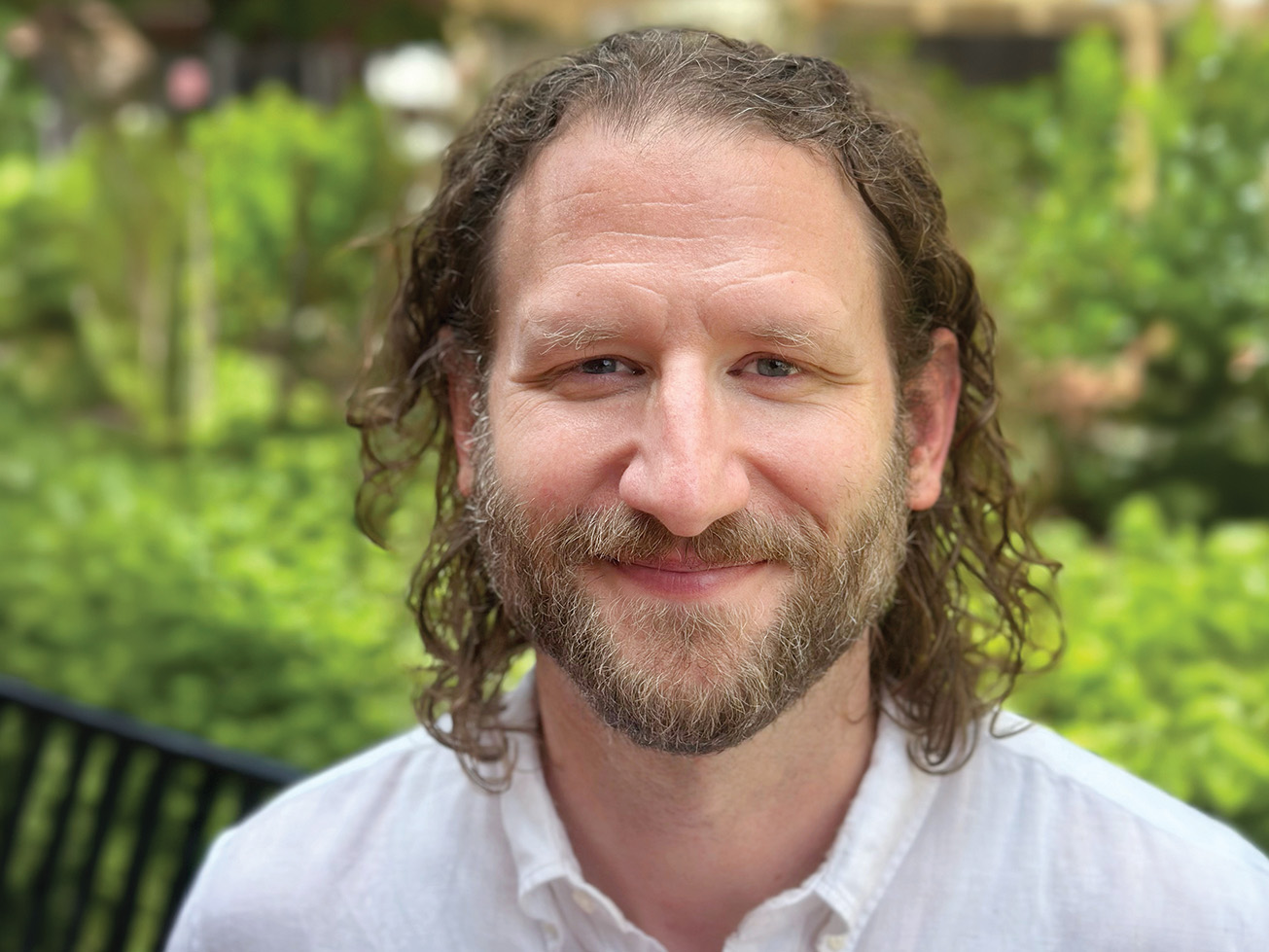 John Jones, Ph.D.
John Jones, Ph.D., School of Life Sciences & Sustainability
It’s hard to concentrate when you’re hungry, much less ace an exam or write a paper. John Jones, Ph.D., an assistant professor in the School of Life Sciences and Sustainability, knows that feeling firsthand
“At the time I didn’t think about it like that; I just thought most college students struggled like I did,” said Jones. “My ability to succeed academically and proto-professionally was hampered by my struggle to find food.” These days, Jones studies the food system and has made it his mission to alleviate food insecurity and food waste on college campuses.
How do you approach food insecurity and food waste at VCU?
My team thinks of VCU as a small city, and when you think about it, between nearly 30,000 students, thousands of employees, and thousands of patients, the VCU system could be a small city. VCU’s food system serves a huge amount of meals each week during the school year, and it’s very complex and definitely generates a lot of waste at many stages. My team and I have only scratched the surface about understanding that waste. VCU as an institution has a huge amount of power and opportunity to where even a, for example, 5 percent reduction in the food waste we generate would be a significant reduction in food waste from a statewide perspective. This is one of the goals of the One VCU Sustainability Plan, and my team and I aim to bring us closer to the goal of a Zero Waste campus.
You recently introduced Ram Fridges around campus (refrigerators with free food for those in need). How do these fridges combat food waste, and why is this important?
Ram Fridges are an evolution of the Little Ram Pantries and serve as decentralized, anonymous extensions of the main Ram Pantry. The Little Ram Pantries are just boxes where we can provide shelf-stable goods, but that is really quite limiting. Ram Fridges are cold storage, which is used to provide foods that require temperature control. That cold storage provides the connection point between food we are rescuing out of various VCU Dining locations, the main example being Shafer Dining Hall, and hungry students. We also can provide extra access locations for produce and other foods Ram Pantry obtains from Feed More and our other food pipelines, as well as whatever food student volunteers grow in campus gardens.
You recently received a $1M+ grant from Virginia Department of Environmental Quality for food waste reduction. How will you utilize this grant?
Our team has three main goals that span both academic campuses and the hospital system: 1. resize food preparation to reduce what might be wasted, 2. identify and rescue food that must be prepared, and 3. compost whatever cannot be consumed to reduce waste entering landfills. Ram Fridges are integral to the rescue efforts. A key part of the grant is food waste-stream mapping efforts that will help us rescue food currently ending up in the trash that with minimal effort could be redirected into a Ram Fridge in a food-safe manner. And, we expect the number of Ram Fridges to expand on Monroe Park and launch on the health campus and hospital in the next few years.